


Auckland War Memorial Museum with Kids: The perfect starting point for a New Zealand road trip
While planning our time in Auckland, Tāmaki Paenga Hira Auckland War Memorial Museum quickly found its way onto our itinerary. David has a particular interest in military history, and we were keen to find somewhere to learn more about New Zealand's role in conflicts such as the Gallipoli Campaign and the Second World War. Having visited the Normandy beaches and seen New Zealand graves in the cemeteries there, we were especially interested in understanding more about the country's contribution and sacrifices overseas.

But the more we read about Auckland Museum, the more we realised that the name only tells part of the story. If you're flying into Auckland for a trip around New Zealand, we'd strongly recommend putting this museum near the start of your itinerary. It gives you context for so much of what you're about to see elsewhere, from Māori and Pacific culture and the history of Tāmaki Makaurau (the wider Auckland region) to New Zealand's unique natural environment, volcanic landscapes and military history.
Here’s everything we think you need to know before adding Auckland Museum to your Auckland itinerary.
Disclosure: We were kindly provided with complimentary admission to Auckland Museum as part of a collaboration. As always, all opinions and experiences are our own.
Māori culture and history
One of the things we were particularly keen to explore at Auckland Museum was its Māori collections. Having just arrived in the country, we wanted to learn more about Māori history, culture and traditions, and understand more about Aotearoa (the Māori name for New Zealand), before moving on to places like the Waitangi Treaty Grounds and Rotorua.
The museum holds an extensive collection of Māori and Pacific taonga, including traditional carvings and other objects with deep cultural significance. Its displays are a really useful and accessible way to start putting some of the history and traditions we'd encounter elsewhere in New Zealand into context.
The Māori Cultural Experience
We actually began our visit with Auckland Museum's Māori Cultural Experience, which combines traditional song, movement, storytelling, poi and of course, the haka, giving you an in depth introduction to Māori history and traditions before you explore the galleries.
It's a really beautiful, emotional and powerful experience. The audience is welcomed into Aotearoa through traditional prayers and songs, and we were taken through the history of the British colonies' arrival and how this affected the indigenous population.

Be warned that some parts of the Cultural Experience are very intense and loud, especially the haka and some of the prayers, so we packed ear defenders for Jamie, our 2.5 year old. If you're travelling with really young children, we'd recommend doing the same.
The Māori Cultural Experience runs twice a day, with sessions currently offered at 11am and 1.30pm, and children under five are free. The experience is an additional ticket on top of general museum admission, so you'll need to book this separately when planning your visit. We chose the morning session and would recommend booking in advance if you'd like to include it in your visit.
Te Ripo o te Moana – Taonga Through Time
One of the major Māori displays to look out for during your visit is Te Ripo o te Moana – Taonga Through Time, a new exhibition exploring Māori art, craftsmanship, migration, ancestry and identity through taonga from across New Zealand.

The displays bring together customary and contemporary Māori art, including whakairo rākau (wood carving), raranga (weaving) and whakakai (body adornment). Through precious objects from across the country, it explores the distinctive traditions, materials and visual languages that have developed in response to the country's unique environment, as well as the stories and symbolism connecting people, land and sea.
One of the most remarkable pieces on display is Te Rā, the only known traditional Māori sail in existence. At almost four and a half metres high, the sail is an extraordinary example of Māori weaving, made from harakeke (New Zealand flax) and featuring an intricate three-way pattern. It is believed to be around 200 years old and was likely collected between 1769 and 1771 during Captain James Cook's expeditions. After two centuries at the British Museum, London, Te Rā is finally home.
The exhibition's name, Te Ripo o te Moana, translates as The Whirlpool of the Sea and reflects its focus on migration, whakapapa and identity.

A note about the Māori and Pacific galleries: Pacific Masterpieces, Pacific Lifeways and Te Marae Ātea Māori Court on the Ground Floor are currently closed while essential works are carried out. These closures are separate from Te Ripo o te Moana, so you can still visit this new Level 1 exhibition during your museum visit.
March of the Triceratops
If you have a dinosaur-obsessed toddler (or love them as much as David and I do), there's a very good chance that March of the Triceratops will be the first thing they want to see.
Newly opened until April 2027 as the exclusive Australasian venue on its world tour, this exhibition brings one of the world's most recognisable dinosaurs to life, exploring how Triceratops lived, moved and survived millions of years ago.
The exhibition features the only known Triceratops herd ever discovered, with five recently excavated fossils displayed together, along with life sized models and animatronics.
Tāmaki Herenga Waka: Auckland's story
If you're interested in understanding Auckland itself, don't miss Tāmaki Herenga Waka on the Ground Floor. The gallery explores the history of Tāmaki Makaurau through its landscapes, people and places, including the early Māori history of the region and the communities that have helped shape Auckland over time - particularly useful early in a New Zealand trip because it gives you some context for the city you're exploring.

Kai Room and Cafes
There are two cafes on the ground floor: Tuitui Museum Bistro & Café is perfect for a long lunch ,serving hot meals like fish and chips, pizza, salads and pies, alongside coffees, wine and beer, while 1929 Espresso Bar is the go to for light bites and hot drinks.
If you've brought your own food, while eating isn't allowed in the galleries, the museum has a large kai (New Zealand word for food) room where you can eat your packed lunch. It also has highchairs and a bottle warmer for the littlest visitors.

Level One - Natural history: dinosaurs, giant moa and a lot more
The natural history galleries were always going to be a big hit with Jamie, but there was plenty here to keep us interested too.

Weird & Wonderful
The Weird & Wonderful gallery is exactly what its name suggests, bringing together some of the more unusual specimens in the museum's natural history collections. There are animals, insects, birds and other specimens to discover, with plenty of strange shapes, colours and creatures that naturally invite a closer look.
For a toddler, this kind of gallery is ideal because there is something to look at almost everywhere you turn and this was one area of the museum where we could happily let Jamie wander between the things that caught his eye rather than trying to see everything in a particular order.
Origins
The Origins gallery is where the natural history story gets much bigger, looking at how New Zealand came to be the country it is today and the geological and evolutionary forces that shaped its famously unique wildlife.
There are amazing dinosaurs, which obviously had Jamie's full attention, and one of the most impressive things to see is the enormous giant moa, giving you a real sense of just how extraordinary New Zealand's prehistoric birdlife was. Then there is Rajah the enormous elephant, another particularly memorable sight and one that Jamie was fascinated by. He stood and talked to that elephant for ages!
Volcanoes
The Volcanoes gallery was one of our favourites, and it isn't just for children. New Zealand's volcanic landscape is such an important part of understanding the country, particularly when you're travelling around the North Island, where volcanoes and geothermally active sites are impossible to ignore (perfect for a trip to Rotorua or Taupo).
The gallery explores everything from the geological forces that created New Zealand's volcanic landscapes to Māori stories and experiences of volcanic activity. It also looks at historic eruptions and disasters, including Tarawera and Tangiwai, as well as what a future major eruption could mean for New Zealand. Don't miss the very authentic "shake house" simulation of the earthquake and chaos surrounding a hypothetical volcanic eruption.

For children, there are plenty of interactive and visual elements to keep them interested, while adults can get a much better understanding of the volcanic landscape you'll encounter throughout your New Zealand travels. Auckland itself sits within a volcanic field, so this isn't just an interesting museum subject; It's directly connected to the landscape outside the museum doors.
Jamie particularly loved the 3.5-metre-high erupting volcano, which brought the whole subject to life for him, and all the different textures volcanic rocks to touch.

Level Two: New Zealand at War
The New Zealand at War galleries on Level 2 were the part of Auckland Museum that David was most looking forward to. They cover a much broader period of the country's military history than just the two World Wars, beginning with the New Zealand Wars (a good source of info before a trip up to the Waitangi Treaty Grounds) and continuing through to the conflicts of the twentieth century.
Atarau: Stories of the New Zealand Wars
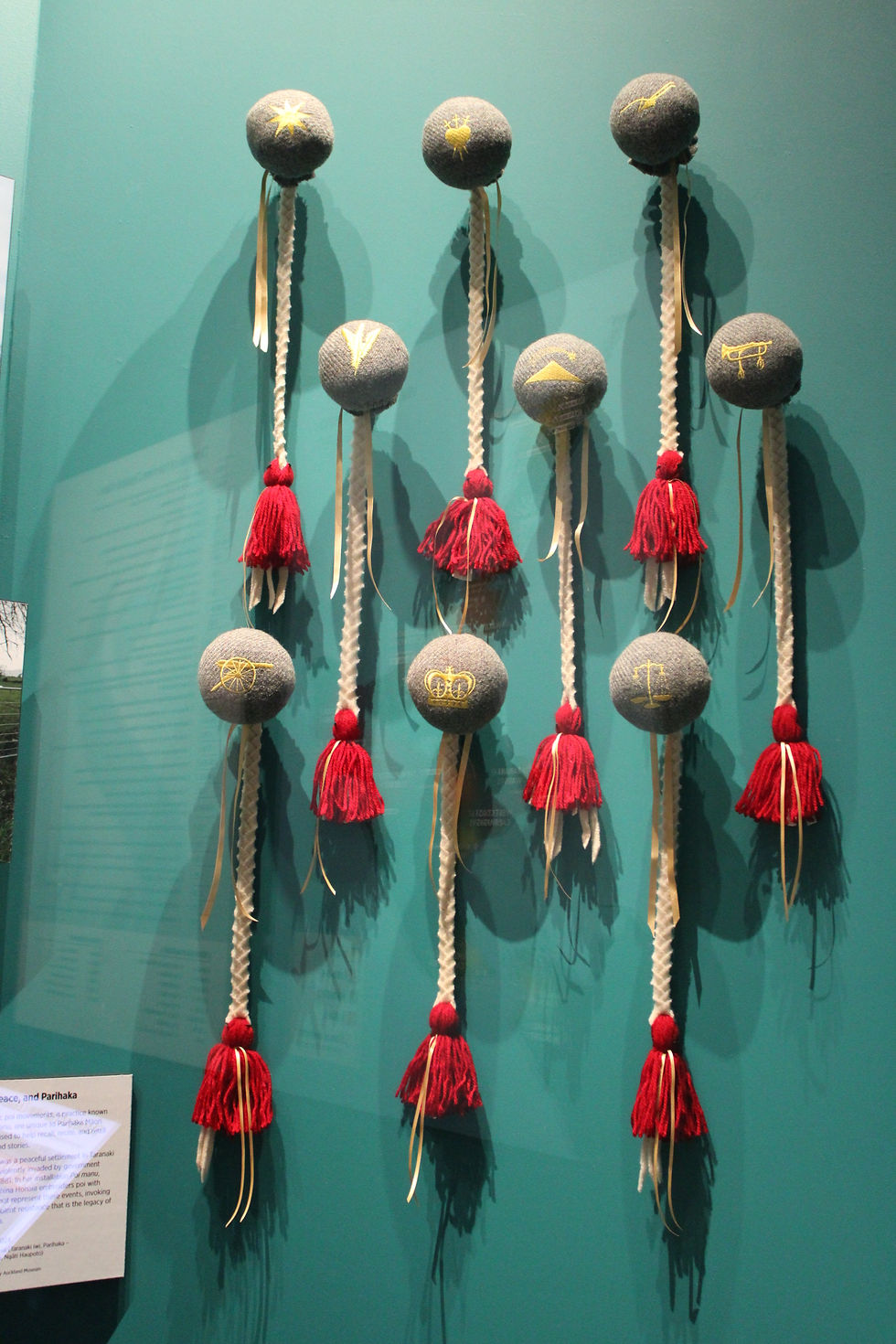
Atarau: Stories of the New Zealand Wars explores the complex history of the nineteenth-century conflicts between the Crown and various Māori groups, covering the circumstances, people and events involved and the lasting impact they continue to have on Aotearoa today.
The newly refreshed gallery uses taonga, contemporary artworks and different perspectives to tell these stories, giving visitors an opportunity to consider the experiences of the people involved alongside the military events themselves.
Scars on the Heart
The Scars on the Heart galleries take a different approach to the two World Wars, focusing less on the military campaigns themselves and more on the people who experienced them and the effect that war had on their lives. Most of the exhibition focuses on the First and Second World Wars, reflecting the huge extent of New Zealand's involvement and the enormous human cost recorded in the Roll of Honour next door.
What makes the exhibition particularly powerful is its emphasis on personal experiences, drawing on the stories of the servicemen and women who went to war as well as the New Zealanders who remained at home. Many of the objects on display are small and personal: letters sent home, photographs, pieces of clothing and other belongings. Interactive computers allow visitors to explore photographs and diaries, while handsets provide access to recorded oral histories, bringing some of these individual experiences to life.
There are also some impressive recreations, including an Anzac bivvy at Gallipoli and a Western Front trench, complete with periscopes. A recreated German bunker contains soldiers' bunks and the command post table of the New Zealand Brigade, with the belongings of a New Zealand soldier and a German soldier displayed on adjacent bunks. Seeing these very ordinary personal possessions alongside the wider history of the war makes the experience feel much more immediate.
One smaller display that is particularly interesting is New Zealand's Invasion of Samoa, which explores New Zealand's occupation of Samoa in 1914 - the country's first military action of the First World War. Although the display itself is small, the objects tell a much bigger story, reflecting an event that had lasting consequences for Samoa, New Zealand and Germany.
The Halls of Memories
The World War One Hall of Memories is particularly striking, with the names of 7,297 New Zealanders from the Auckland Province who died during the First World War recorded around the walls. The significance of the memorial becomes even clearer when you consider that many of those who died were buried thousands of miles from home, in cemeteries across Europe and beyond, while almost a third of those killed have no known grave at all.

The Hall was designed as a place of remembrance, and its architecture reinforces that purpose. The Roll of Honour is engraved into white Sicilian marble, while the sanctuary contains symbolic details including rosemary, poppies and a bronze wreath of kawakawa leaves. Above the entrance is a spectacular stained-glass ceiling featuring the coats of arms of the British Dominions and Colonies during the First World War.
New Zealand's military contribution during the Second World War was remarkable given the country's relatively small population, with more than 200,000 New Zealanders serving. The World War Two Hall of Memories continues this role of remembrance, recording those from Auckland Province who died during the Second World War and later expanding to commemorate New Zealanders who lost their lives in conflicts including Korea, Malaya-Borneo and Vietnam.
Level Two also houses two particularly significant aircraft from the Second World War. The museum's Spitfire was presented to the people of New Zealand by a grateful Britain, while David was particularly excited to see the Japanese Zero, a fighter aircraft that was also used in kamikaze attacks during the Second World War.

The Holocaust Gallery
The museum's Holocaust Gallery, developed with the support of Auckland's Jewish community, tells the story of the Holocaust through artefacts, photographs and the personal experiences of refugees who came to New Zealand.
This is one area of the museum where we'd recommend considering your child's age before deciding whether to visit. With a toddler, we didn't feel that Jamie was old enough to understand the wider historical context or engage meaningfully with the subject matter, so we chose not to take him into this part of the museum.
For older children who are beginning to learn about the First and Second World Wars at school, however, these galleries could provide useful context, particularly through the personal stories and objects on display.
Auckland Museum FAQs
Where is Auckland War Memorial Museum?
Auckland War Memorial Museum is located in Auckland Domain, just a short distance from central Auckland. The Domain is Auckland's oldest park, with expansive lawns, gardens and the beautiful Wintergardens providing plenty of space to enjoy the outdoors before or after your museum visit.
This is one of our favourite things about visiting the museum with children. Rather than spending an entire day indoors, you can easily combine the museum with some time outside, which makes the whole experience feel much more manageable with young children. If Jamie reached his limit with dinosaurs, volcanoes and museum exhibits, we could simply head outside for some fresh air and a run around.
Is Auckland Museum worth visiting if you aren't interested in military history?
Despite its commemorative name, Auckland Museum is far more than a military museum. Its collections span Māori and Pacific culture, natural history and military history, alongside cultural performances and temporary exhibitions such as March of the Triceratops.
That variety is one of the reasons we'd recommend it to families. You don't all need to be interested in the same things to get something from a visit - David could happily spend time in the war galleries, while I was drawn to the Māori collections and Jamie was far more interested in dinosaurs, animals and the erupting volcano.
If you're visiting Auckland at the beginning of a trip around New Zealand, we'd say that Auckland Museum is one of the best places to start your holiday because it gives you an incredible grounding in the country you're about to explore.
Is Auckland Museum free for children?
Children under five are currently free, so Jamie didn't need a ticket when we visited. For international visitors, at the time of writing, the current admission is NZ$27 for adults and NZ$13.50 for children aged 5-15, with a family ticket for two adults and two children costing NZ$72.
New Zealand visitors are currently asked for a donation, with Auckland residents and museum members able to visit free with the appropriate MyMuseum card or proof of address.
If you'd like to see the Māori Cultural Experience, this is an additional experience rather than part of General Admission, so you'll need to check the current ticketing arrangements when planning your visit.
How long do you need at Auckland Museum?
This is a difficult one because it depends enormously on how much you want to see. You could easily spend several hours here, particularly if you want to explore the military history, Māori and Pacific, natural history and changing exhibition galleries.
We'd recommend allowing at least 2–3 hours if you want to see multiple galleries, although families with toddlers may prefer a shorter visit combined with time in Auckland Domain. We were in the museum for 4.5 hours and could have happily stayed longer!
Can you take a pushchair to Auckland Museum?
Yes, the Museum is generally accessible, with all areas accessible to pushchairs and wheelchair users with lifts throughout.
Is there parking at Auckland Museum?
Yes, there is quite a lot of free street parking around the museum which is limited to 2 or 3 hour blocks, or if you'd like longer, there is an underground carpark right next to the museum which is paid.
Pin this blog for later!


