


Brighton Royal Pavilion visitor guide: England's most extraordinary palace
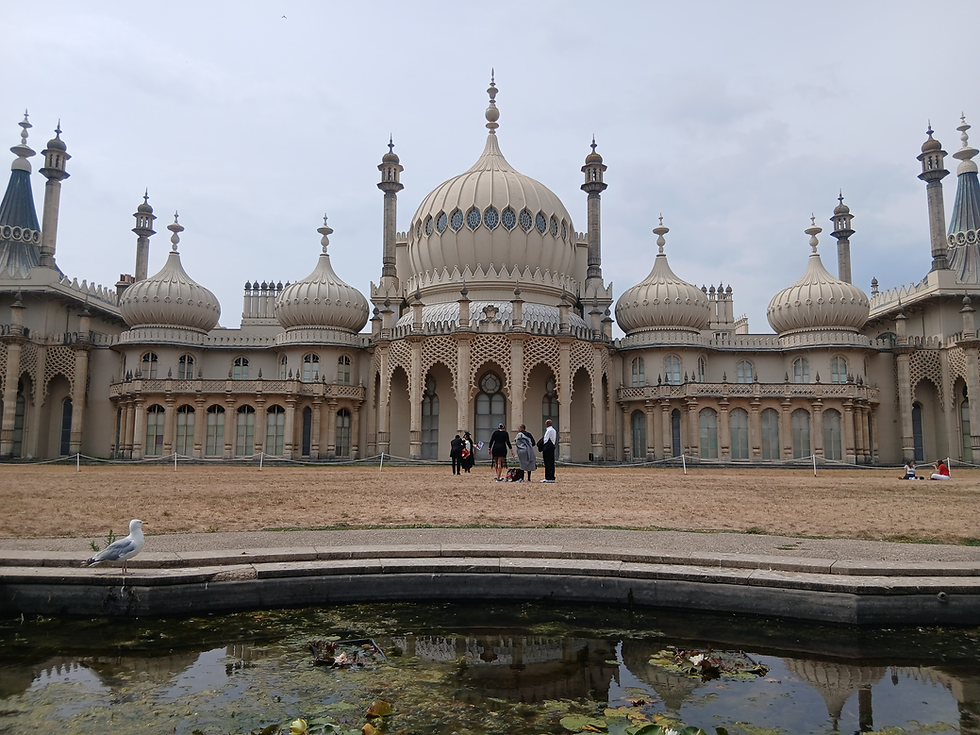
If someone showed you a photograph of Brighton's Royal Pavilion without telling you where it was, you'd probably guess India, not the south coast of England. With its onion domes, soaring minarets and exotic silhouette, the Royal Pavilion is unlike any other royal residence in Britain. Step inside and the surprises continue, with lavish Chinese-inspired interiors, glittering chandeliers, gilded dragons and rooms so outrageous that they almost don't seem real.
Originally created as the extravagant seaside retreat of the Prince Regent (later King George IV), today the Royal Pavilion is one of the UK's most unique historic attractions.
We recently visited on a press trip to discover whether this remarkable palace deserves a place on your Brighton itinerary, but we weren't paid to post and as always, all opinions are ours!
In this visitor guide, we'll share the Royal Pavilion's fascinating history, our favourite rooms, practical visitor information and whether it's a good choice for families visiting Brighton.
A brief history of the Royal Pavilion
The story of the Royal Pavilion begins in the late eighteenth century, when the Prince Regent, later King George IV, fell in love with Brighton. Drawn by the fashionable seaside resort, he purchased a modest house that would eventually become one of Britain's most extraordinary royal residences.
Working with architect John Nash, the Prince transformed the building into the spectacular palace we see today. Inspired by Indian architecture on the outside and lavish Chinese interiors within, the Royal Pavilion became the setting for some of the most extravagant royal banquets and entertainments of the Regency era.
His brother William IV also used the palace for visits to Brighton during his reign. Along with his wife, Queen Adelaide, he made several changes to the interiors before the throne passed to Queen Victoria. Victoria only visited the Pavilion a few times before deciding that it lacked the privacy and space needed for her growing family and in 1850, she sold it to the town of Brighton.
The Pavilion later found a completely different purpose during the First World War, serving as a military hospital for wounded soldiers from India, and later as a hospital for British soldiers who had undergone amputations. Operating between 1916 and 1920, it provided not only medical care and rehabilitation but also training in new skills to help former servicemen rebuild their lives and find employment after the war. This remarkable and unexpected chapter in the building's history can be explored in an interesting exhibition room upstairs in the palace.

Today, the Royal Pavilion holds a unique place in Britain's heritage. It is the only former royal palace in England to be owned by the people, cared for on behalf of the city and welcoming visitors from around the world to experience its amazing history and spectacular interiors.
First impressions
Even after seeing photographs, nothing quite prepares you for standing beneath the Pavilion's magnificent domes. It feels wonderfully out of place, rising above the surrounding streets like a palace transported from another continent. The gardens provide beautiful views from every angle (head around the opposite side the main entrance to find a small reflecting pool), making it impossible not to stop for photographs before heading inside. Once through the doors, however, the interiors steal the show.
Extravagance at every turn
One thing quickly became apparent during our visit - there is absolutely nothing understated about the Royal Pavilion. Every room seems determined to outdo the last!
Even the staircases are works of art. We particularly loved the beautifully crafted faux bamboo railings, a clever Regency interpretation of Chinese design that perfectly captures the playful fantasy running through the entire building. Here are some of our favourite rooms in the palace:
The Banqueting Room
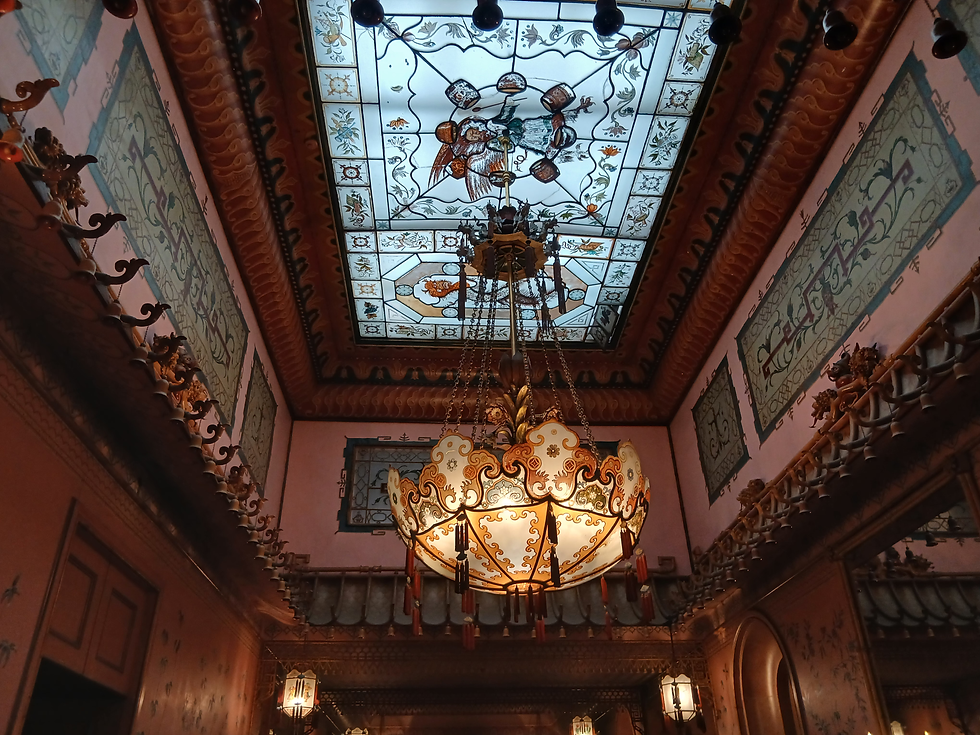
If there is one room that perfectly sums up George IV's love of extravagance, it's the Banqueting Room. Your eyes are immediately drawn upwards to the astonishing central chandelier, made of over 1000 crystals and suspended beneath a magnificent domed ceiling. Supported by a dramatic silver dragon, it weighs around a tonne and dominates a room already overflowing with gilded dragons, oriental-inspired decoration and elaborate detail.
This was the stage for some of the most lavish royal dinners of the Regency period. George IV delighted in entertaining, and guests were treated to spectacular feasts featuring around 60 entrées, alongside multiple soups, fish courses, roasted meats and elaborate desserts inspired by cuisines from across the world. Dining here wasn't just about eating, it was theatre!

The Great Kitchen
Just a few steps from the Banqueting Room lies one of the most fascinating spaces in the palace. Unlike many great houses, where kitchens were hidden away in distant wings or even separate buildings, George IV insisted that his Great Kitchen should sit immediately beside the dining room. His reason was simple: he wanted his guests to enjoy the very best, with every dish arriving at the table as fresh and hot as possible.
The room itself is every bit as decorative as the state apartments above. Enormous cast-iron cooking ranges line the walls beneath ornate pagoda-style canopies, while elegant palm tree columns support the ceiling in what must be one of the most beautiful working kitchens ever created. George IV was so proud of his kitchens that he would often take guests on guided tours before dinner, a highly unusual practice at a time when royal kitchens were normally kept firmly out of sight.
It's easy to imagine the organised chaos as cooks, servants and kitchen staff worked together to prepare feasts fit for a king.
The Music Room
While the Banqueting Room was impressive, the Music Room left us speechless. This was where George IV entertained guests with concerts and lavish evening receptions - often considered the Pavilion's masterpiece, it's an extraordinary explosion of colour, gilding and craftsmanship. Every surface seems alive with dragons, lotus flowers, intricate carvings and shimmering gold leaf, all beneath a beautiful domed ceiling that ranks among the finest interiors in Britain.
The Long Gallery
One of our personal favourites was the elegant Long Gallery. Decorated in soft shades of pink, gold and cream, the walls are covered in beautiful bamboo-patterned wallpaper. Look closely and you'll notice something rather charming. Having never actually seen bamboo growing in China, the European designers depicted stems curling with flowers and berries, creating a wonderfully fanciful version of the plant rather than a botanically accurate one.
An enormous lotus flower chandelier illuminates the space and while decorative friezes inspired by pagoda rooftops run around the upper walls. The hallway is lined by detailed statues of Chinese figures that could be set nodding by palace staff, greeting the King's guests as they arrived.
The Royal Bedrooms
After the grandeur and spectacle of the state rooms, the Royal Bedrooms offer a fascinating glimpse into the more private side of life at the Royal Pavilion. Unlike the enormous entertaining spaces designed to impress guests, George IV's private apartments were created with comfort in mind. By the time they were completed, the King was older, in declining health and struggling with his weight, so these rooms were designed to be more practical and restful, moved downstairs, with softer colours and a more intimate atmosphere.
That doesn't mean they lack the Pavilion's trademark extravagance. The King's Bedroom features a beautifully decorated bed within a curtained alcove, designed to provide warmth and privacy, while the walls are covered with a hand-painted recreation of one of George IV's favourite wallpaper designs, filled with colourful dragons, birds and flowers.
Upstairs, the Yellow Bow Rooms were used by George IV's brothers, the Duke of York and the Duke of Clarence. With their striking yellow walls, Chinese watercolours and elegant Regency furniture, they offer another insight into how royal guests would have experienced the Pavilion during its heyday.
The Adelaide Corridor
Before leaving, don't miss the elegant Adelaide Corridor, tucked away on the upper floor. Named after Queen Adelaide, the wife of William IV, this quieter space preserves one of the palace's rarest treasures: sections of its original nineteenth-century Chinese wallpaper.
The Audio Guide
The Royal Pavilion has an excellent audio guide (£4 additional cost or £2 if you use your own smartphone), and we'd highly recommend making use of it. Rather than overwhelming visitors with lengthy information boards, the guide allows you to explore each room at your own pace while hearing fascinating stories about George IV, William IV and Queen Victoria, plus some useful context about royal entertaining, the palace's servants and the people who brought this extraordinary building to life.

A Palace Full of Dragons
If dragons are your thing, you're in for a treat - they're everywhere! Look closely and you'll spot dragons decorating chandeliers, ceilings, fireplaces, furniture and carved woodwork throughout the palace. Once you start noticing them, it becomes something of a game to see just how many you can find.
During our visit, the Pavilion was also hosting a special dragon-themed exhibition, running until November, with playful dragon footprints, tails and other installations hidden throughout the palace. If you're visiting as a family, children will love hunting for these additions as they explore the magnificent state rooms.
Upstairs in the Prince Regent Gallery, the temporary exhibition Fire and Water: Dreaming of Dragons explores how dragons have inspired cultures all over the world.
Check the museum's What's On page for all kinds of upcoming dragon related arts and crafts activities, storytelling and tours.
Visitor Information
Opening Times
The Royal Pavilion is open daily throughout the year, although opening hours vary slightly by season. As opening times can occasionally change for special events or maintenance, it's always worth checking before you travel.
April to September: 9:30 - 17:45pm (last admission 17:00pm)
October to March: 10:00 - 17:15pm (last admission 16:30pm)
Brighton Royal Pavilion Tickets
Tickets can be purchased online or on the day of your visit, although booking in advance not only guarantees your preferred time slot but also offers a 5% discount on standard admission.
One feature we particularly like is the Royal Pavilion Annual Pass. Standard admission includes unlimited return visits for a full year from the date of issue, making it excellent value if you're planning to revisit Brighton (it's a really easy day trip from London) or simply want another excuse to admire those incredible interiors. Family tickets are also available, helping to make one of Brighton's most iconic attractions more affordable for those visiting with children (Families of at least one adult and two children receive one child ticket free of charge).
Adult £21.50
Child (age 5-18) £13.00
Brighton & Hove residents
(BN1, BN2, BN3 and BN41 postcodes) and up 4 children £16.50
Resident young person (13-18) £9
Students at University of Brighton, University of Sussex and Greater Brighton Metropolitan College (Proof required) and up to 4 children £16.50
Royal Pavilion & Museums Trust Members and National Art Pass holders free
If you're travelling by train with friends you could also take advantage of the Rail2for1 offer - Dated rail tickets for both people must be presented to obtain the offer, more info on the National Rail's Days Out website.

Accessibility
As you'd expect from a historic residence, there are some access limitations, but the Pavilion has worked hard to make the experience as inclusive as possible.
The ground floor is fully accessible, with accessible toilets, pushchair storage and wheelchairs available on request. The first floor can only be reached by stairs, however visitors unable to use them can still experience these rooms through a video tour of the upper floor. Guide and assistance dogs are also welcome.
For visitors with specific needs, full information about accessibility can be found on the Royal Pavilion's website.
If you're visiting with really little ones, the Royal Pavilion has done some amazing scientific research with Sussex Baby Lab into how to make the museum as sensory and enjoyable for babies as possible - you can read all about it here!
Toilets
Toilets are available throughout the Royal Pavilion, including an accessible toilet on the ground floor close to the entrance and baby changing facilities.
Café
At the time of our visit, the café inside the Royal Pavilion was temporarily closed. Fortunately, you're right in the heart of Brighton, with countless cafés, bakeries and restaurants just a few minutes' walk away around The Lanes and North Laine, making it easy to find somewhere for lunch or a well-earned coffee after your visit.
Gift Shop
Don't rush straight home after your tour, the Royal Pavilion Shop is well worth a browse. Located at the end of the visitor route, it stocks an excellent range of gifts inspired by the palace's extraordinary interiors, from books and homeware to jewellery, stationery and children's gifts. We particularly liked that many of the products draw directly from the Pavilion's distinctive dragons, chinoiserie and Regency designs, making them far more unique than the usual museum souvenirs.

Nearby Attractions
One of the best things about visiting the Royal Pavilion is its location. Right in the heart of Brighton, it makes the perfect starting point for exploring some of the city's most famous attractions. Whether you're visiting for a day trip or planning a longer Brighton city break, there is plenty to discover within easy walking distance.
Brighton Museum & Art Gallery
You don't even need to leave the Pavilion gardens to reach your next attraction. Located right next door, Brighton Museum & Art Gallery is a brilliant addition to your visit, especially if you're interested in art, history and culture. Housed in the former Prince Regent's riding stables, part of the original Royal Pavilion complex. Designed by John Nash, the same architect responsible for the Pavilion's transformation, this magnificent building once housed the royal horses and carriages before becoming a museum in the nineteenth century.
Today, it explores everything from Brighton's local history to world cultures, fashion, art and design. Families will enjoy the interactive displays, colourful galleries and fascinating collections, making it a great follow-on from the Royal Pavilion if children still have some exploring energy left.
The Lanes
No visit to Brighton is complete without getting lost in The Lanes.
This maze of narrow, winding streets dates back to the city's original fishing village and is now famous for its independent shops, quirky boutiques, antique stores, cafés and jewellers. It's a lovely place to wander after visiting the Pavilion, with plenty of interesting corners to discover.
North Laine
Just a short walk away, North Laine offers a completely different atmosphere. Known for its colourful street art, vintage shops, independent businesses and relaxed cafés, it's one of Brighton's most vibrant neighbourhoods.
For families, it's a fun area to explore, with plenty of places to stop for ice cream, cake or lunch after a morning of sightseeing.
Brighton Beach
From the Royal Pavilion, it's only a short walk downhill to the seafront.
Brighton's pebble beach is the perfect place to let children burn off some energy after exploring the palace. Enjoy a stroll along the promenade, take in the views across the English Channel or simply relax by the water.
Brighton Palace Pier
A Brighton classic, the iconic Brighton Palace Pier has been entertaining visitors since 1899.
With traditional fairground rides, arcade games, food stalls and spectacular sea views, it offers a fun contrast to the history and grandeur of the Royal Pavilion. Younger visitors will particularly enjoy the mix of old-fashioned seaside charm and exciting attractions.

SEA LIFE Brighton
Located beside the seafront, SEA LIFE Brighton is another excellent family-friendly addition to your itinerary. Home to thousands of marine creatures, including sharks, turtles and rays, it is the world's oldest operating aquarium and makes a great rainy-day option or a fun follow-on visit for children fascinated by the underwater world.
British Airways i360
For one of the best views across Brighton, head to the British Airways i360.
This futuristic glass viewing pod gently rises 138 metres above the seafront, offering panoramic views across the city, South Downs and coastline. On a clear day, the views are spectacular and provide a completely different perspective of Brighton's famous landmarks.
Theatre Royal Brighton
Just a few minutes' walk from the Royal Pavilion, the Theatre Royal Brighton is one of Britain's oldest and most historic theatres. First opened in 1807, the theatre has welcomed some of the biggest names in entertainment over more than two centuries, from actors and comedians to musicians and performers. The current Grade II listed building dates from the nineteenth century and remains a much-loved part of Brighton's cultural scene.
If you're visiting Brighton as part of a longer city break, it's worth checking what's on during your visit. From West End musicals to comedy, ballet and children's theatre, the Theatre Royal offers a fantastic evening activity after a day exploring the Pavilion and the city.
Pin this blog for later!


