Dinosaurs, Marble Runs and Rainforests... oh my! The ultimate family guide to the Eden Project
Updated: Sep 21
As the fictional Dr Ian Malcolm famously put it, “Life, uh, finds a way”... and while this quote feels particularly fitting for the spectacular dinosaur installations taking over the Eden Project this summer, it could just as easily apply to the entire site! Built within a former china clay pit near St Austell, Cornwall, the Eden Project is an extraordinary example of environmental regeneration.
We were invited to experience the Eden Project for free on a press visit, but we were not paid to post and as always, all opinions are our own.

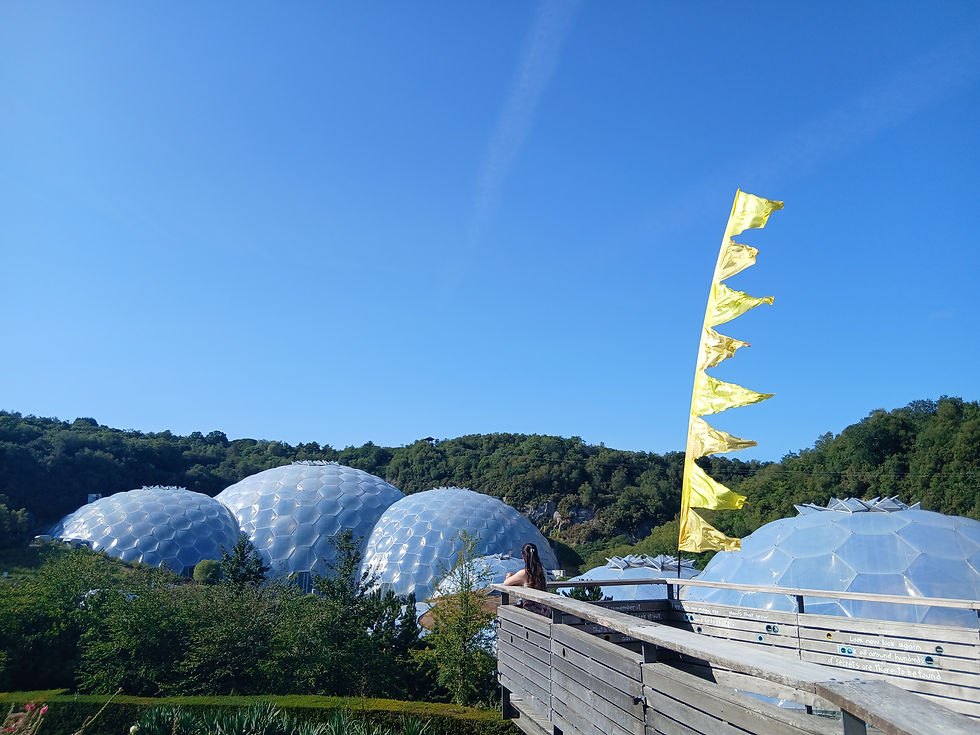
The Eden Project's instantly recognisable biomes are engineering marvels, constructed from a tubular steel framework and hundreds of hexagonal and pentagonal "bubble" panels made from ETFE (ethylene tetrafluoroethylene): an incredibly strong, lightweight transparent material that allows sunlight to flood the giant domes.
Beyond the biomes, you'll find acres of beautifully landscaped outdoor gardens, family-friendly play areas, seasonal events and interactive exhibits that explore biodiversity, sustainability and the natural world.
There’s also an extra reason to visit this year, as dinosaurs have taken over the Eden Project for the summer. With life-sized animatronic dinosaurs hidden throughout the biomes, dinosaur-themed activities and the Olivier Award-winning Dinosaur World Live show, the prehistoric takeover, Dinosaurs Return, adds another layer of adventure for families visiting over the next month.
In this guide, we’ll share everything you need to know about visiting the Eden Project with kids, including what to see, family facilities, where to eat and our top tips for making the most of your day.
What is the Eden Project?
It's hard to believe that one of Cornwall's most famous attractions was once a vast, barren china clay quarry. Today, the Eden Project is an award-winning environmental attraction and educational charity that has transformed this former industrial crater into a thriving garden filled with plants from around the world.
Opened in 2001, the Eden Project was created to inspire visitors to think more about the relationship between people and nature. At its heart are the two iconic, futuristic biomes that recreate colourful Mediterranean landscapes and the largest indoor rainforest in the world; towering tropical trees, cascading waterfalls and exotic plants create an immersive journey through some of the world’s most biodiverse environments.
The Eden Project's extraordinary transformation is a powerful reminder of what can be achieved through regeneration, innovation and a little imagination.

Is the Eden Project good for families?
Absolutely. The Eden Project is one of the UK's best family attractions, with plenty to keep children of all ages entertained while still being fascinating for adults. Whether you're visiting with a baby, toddler or older children, it's an easy place to spend a full day exploring together: the combination of indoor biomes, outdoor gardens, seasonal events and interactive exhibits means there's always something new to discover, whatever the weather.
Parents will be pleased to know the site is largely pushchair friendly, with accessible paths and lifts connecting the different levels. There are baby changing facilities and plenty of toilets throughout the attraction, so you're never far from the essentials.

When little legs need a break, you'll find several cafés serving everything from quick snacks to hot meals, along with plenty of picnic areas if you've brought your own lunch.
Explore the Rainforest Biome
This was the highlight of our visit, and we spent well over an hour exploring inside. Home to the world's largest indoor rainforest, this vast domed structure recreates the hot, humid conditions of the tropics, with temperatures reaching up to 35°C. It’s an incredible immersive experience that transports you from Cornwall to the jungles of South America, Africa and Southeast Asia in just a few steps. In fact, the biome is so enormous that we even stumbled upon a full-sized Malaysian house hidden amongst the foliage!
As you wander through the lush vegetation, you'll discover towering tropical plants, a cascading waterfall and some of the world's most important crops growing in their natural environment. Look out for banana trees laden with fruit, cocoa pods, nutmeg and fragrant coffee plants. You might also spot the little free-roaming roul-roul partridges: colourful birds that wander throughout the biome.
The beautiful Canopy Walkway is a 150-metre gently sloping path that winds its way upwards through the rainforest canopy. As you journey through the different levels, you'll discover interactive exhibits explaining how rainforests create rainfall, store carbon and help regulate the Earth's climate, before emerging among the treetops for spectacular views across the biome.
If you're feeling adventurous, don't miss the swaying Canopy Rope Bridge, suspended high above the forest floor. If you'd rather keep both feet firmly planted, the accessible Cloud Bridge offers equally impressive views as swirling mist drifts around you. Along the route, interactive features such as the Rain Shack and Carbon Platform help bring the science of the rainforest to life.
For an unforgettable perspective, climb up to the Rainforest Lookout. Reached via an additional 115 steps from the Canopy Walkway, this elevated platform takes you 20 metres above the forest floor, offering a bird’s-eye view across the treetops and waterfall. The stairs are suspended and move and sway as you climb, so visitors with vertigo may prefer to give this one a miss.
It’s also worth bearing in mind that this is the hottest part of the biome. The lookout may close during very hot weather, and pregnant visitors are advised not to use it due to the risk of fainting. If you’re visiting with very young children, they must be able to climb the stairs independently - children cannot be carried because of the movement of the suspended staircase.
The good news for families is that almost all of the rest of the Rainforest Biome is accessible to pushchairs and wheelchairs via wide, gently sloping paths. The Rainforest Lookout, Canopy Rope Bridge and one staircase leading to the upper-level exhibits are the exceptions, but there is still plenty to see and do without tackling these sections.
Visit the Mediterranean Biome
While the Rainforest Biome often steals the spotlight, don’t skip the Mediterranean Biome right next door. This space transports you to warmer climates around the world, showcasing plants and landscapes from the Mediterranean, South Africa, California and Western Australia.
Compared to the hot and humid rainforest, the Mediterranean Biome offers a much more comfortable environment for younger children who might find the rainforest heat a little overwhelming. Here you’ll discover the dry-climate plants: enormous cacti, colourful flowers, ancient olive trees, grape vines and citrus fruits growing among beautiful landscaped terraces.
Take your time exploring the winding paths and look out for the different ways plants have adapted to survive in warmer, drier environments. It’s a fascinating contrast to the rainforest and a brilliant opportunity for children to discover how different parts of the world support different types of life.
Dinosaurs Return: The Eden Project Dinosaur Experience
Dinosaurs have returned to the Eden Project this summer until September 6th, and they have made themselves right at home among the tropical plants of the Rainforest Biome. Hidden throughout the lush greenery are 15 life-sized animatronic dinosaurs and flying reptiles, with realistic movements and sounds that bring these prehistoric creatures back to life in a suitably epic setting. From raptors hiding among the giant Amazonian lily pads to the huge 40-foot Tyrannosaurus rex towering above visitors, children will love searching through the foliage to discover each dinosaur.

But the dinosaur fun doesn't stop once you leave the biome. Around the wider site, families can explore the Paleo Lab, where budding palaeontologists can get hands on with fossils and discover how scientists uncover clues about creatures that lived millions of years ago. There are also plenty of dinosaur themed garden games to enjoy, including dino croquet and a Triceratops ring toss - perfect for burning off some energy after exploring the biomes.
Dinosaur World Live
As part of the summer dinosaur takeover, families can also enjoy Dinosaur World Live, an Olivier Award-winning theatrical experience bringing prehistoric creatures to life on stage.
This spectacular 45-minute show features life-size, incredibly realistic dinosaur puppets, operated by a team of skilled puppeteers - seeing these enormous creatures moving around right in front of you is a real wow moment. Combining theatre, storytelling and fascinating dinosaur facts, the show offers a fun and educational experience that will capture the imagination of children and adults alike.
Dinosaur World Live is included with Eden Project admission, with three performances taking place each day during the summer event. Suitable for all ages, it’s a brilliant way to add a little extra prehistoric adventure to your visit, especially for younger dinosaur fans who may not be ready to leave the creatures in the biomes behind!

Giant Marble Runs
The Eden Project’s newest permanent attraction is a brilliant addition for families: the ingenious Giant Marble Runs use play, engineering and working together across more than 100 metres of wooden tracks spread throughout the Outdoor Gardens.
Starting near the Visitor Centre at the top of the former clay pit and winding all the way down towards the floor, the marble runs are made up of a series of interactive installations featuring spirals, corkscrews, funnels, jumps, mazes, hand-powered lifts and gravity-powered tracks. Children can experiment with different routes, test their ideas and discover how movement, speed and gravity work together as they guide their marble through each challenge. It’s a simple idea, but it’s great fun for kids and adults alike, while sneaking in a little bit of science and problem-solving along the way.
Before you begin, don't forget to pick up a specially carved wooden marble from the Visitor Centre gift shop. A £5 refundable deposit is required, or you can choose to keep it as a souvenir of your visit.

Adventure playgrounds
If your little ones still have energy to burn after exploring the biomes, make sure you leave plenty of time for Nature’s Playground. This huge adventure play area covering nearly 500m² is designed to get children climbing, exploring and getting hands-on with the natural world, making it the perfect place for a break between attractions.
The centrepiece is the impressive Tree of Life: a 9-metre-high wooden tower featuring climbing nets, an accessible basket swing and a corkscrew tube slide. Younger visitors can also enjoy the water and sand play areas, with interactive water cascades, pools and digging zones designed to encourage imaginative play.
Built using sustainable timbers including Douglas fir and oak, the playground has been carefully designed for children aged 2 to 16, with different challenges to suit a range of ages.
Nearby, families can also discover the Minibeast Mansion, a hexagonal climbing tower inspired by a giant bug house, and the Spiral Garden, a sensory space filled with soft pathways, willow structures and different textured plants. Children will also enjoy trying to catch the vapour rings blown by Infinity Blue, a huge installation inside the Core Building.

Explore the Outdoor Gardens
While the biomes are undoubtedly the stars of the Eden Project, don’t rush through the Outdoor Gardens. Spread across the dramatic landscape of the clay pit crater, these gardens offer a completely different experience, with winding paths, seasonal planting and plenty of space to slow down and explore. In summer months they're alive with bees and butterflies!
Throughout the gardens, you’ll discover striking sculptures, colourful displays of seasonal flowers and carefully designed landscapes that change throughout the year. There are quieter walking routes here too, making it a lovely place to escape the crowds and enjoy the natural surroundings.
The gardens also offer some of the best views across the Eden Project, with fantastic viewpoints looking back over the iconic biomes and down into the valley below. It’s a chance to appreciate just how incredible the transformation has been, from an industrial quarry to a thriving landscape filled with plants, wildlife and creativity.

Eating at the Eden Project
A visit to the Eden Project is easily a full-day adventure, so thankfully there are plenty of places to stop for food, drinks and snacks throughout your visit. Whether you’re looking for a proper family meal, a quick coffee, a Cornish treat or somewhere to enjoy a picnic, there are options to suit every kind of visitor.
The Biome Kitchen, located on the ground floor of the building between the Biomes, is probably your best bet if you’re looking for a proper family lunch. The menu is designed with both healthy people and a healthy planet in mind, using Eden-grown produce wherever possible. There’s an amazing selection of colourful, freshly prepared hot meals, with a huge choice of vegetarian dishes alongside options such as chicken and sausages, as well as sandwiches and children’s lunch boxes. You’ll also find hot and cold drinks, cakes and snacks.
For something a little special, head to the Med Terrace Restaurant inside the Mediterranean Biome. With its warm Mediterranean atmosphere and patio seating, it feels like you’ve been transported abroad without leaving Cornwall. The menu celebrates Mediterranean flavours, with dishes including paella and artisan pizzas made using Eden-grown and locally sourced ingredients. Lunch is served daily during the spring and autumn seasons, with pre-booked evening dining available on selected evenings.

For a quick bite, there are cafés dotted around the site: The Coffee House at the Visitor Centre is perfect for a snack (or a Cornish Pasty!) when you arrive or before heading home. The Core Café offers barista coffees, teas, cold drinks, sandwiches and cakes, while the Stage Café and Bakehouse provide more family-friendly options including loaded fries, kids’ meals, pasties and freshly made sandwiches during peak periods.
And of course, no visit to Cornwall would be complete without an ice cream! The Eden Project’s ice cream parlours serve rainforest-inspired flavours and sorbets, made using panela (unrefined whole sugar cane), with locations between the Biomes and in the Outdoor Gardens.
Families are also welcome to bring their own picnic, with plenty of scenic spots around the gardens to sit and enjoy lunch. We’d recommend bringing a few snacks and a refillable water bottle too - the Eden Project provides free Cornish tap water refill stations and drinking fountains throughout the site, including around the restaurants and gardens, so you can top up whenever you need to.
To reduce single-use coffee cups, you can bring your own reusable cup and receive 30p off a hot drink, buy an Eden-inspired bamboo cup and get a hot drink free, or borrow a reusable cup for a £2.50 deposit, which is refunded when you return it the same day.
One of the things that makes eating at the Eden Project different is that the food reflects the organisation’s wider sustainability mission. The attraction has won recognition for its family food, with ingredients prioritising local, seasonal and responsibly sourced produce. Many ingredients are grown on-site in the Eden Project’s own regenerative plant nursery, with fresh crops harvested and delivered to the kitchens that same day.

From Cornish meat, dairy and eggs to locally grown salad, vegetables and herbs, the focus is on reducing food miles, avoiding unnecessary packaging and demonstrating what a more sustainable food system could look like.
The site also collects and reuses much of its own water. Around two-thirds of the Eden Project’s water needs are supplied from water collected on-site, including rainwater harvested from the Biomes. This is used to irrigate plants, flush water-efficient toilets, top up the Rainforest Biome waterfall and maintain the humid conditions inside the rainforest. All very impressive!
Top Tips for Visiting with Children
The Eden Project is one of those places where it’s easy to underestimate how much there is to see and do. With huge biomes to explore, outdoor gardens, play areas, seasonal events and plenty of walking involved, a little planning can make your family day out much more enjoyable:
Arrive early – especially during weekends and school holidays. Getting there near opening time gives you a chance to explore before the busiest periods and means you’ll have more time to enjoy everything at a relaxed pace.
Allow at least 5 - 6 hours for your visit. Don’t try to rush through the biomes – take your time to look at the plants, discover the hidden details and let children explore at their own pace.
Wear comfortable shoes as there is a lot of walking, including some slopes and paths around the site. The Eden Project is built into a former clay pit, so expect some hills and changing levels as you explore.
Bring waterproofs, a towel and spare clothes for younger children. Cornwall’s weather can be unpredictable, and with water play areas, outdoor gardens and plenty of opportunities for little ones to get messy, having a change of clothes can be a lifesaver!
Pick up your marble as soon as you arrive if you want to experience the Giant Marble Runs. Collecting one from the Visitor Centre gift shop at the start of your visit means children can enjoy the different marble challenges as you make your way around the site without having to hike back up to the top. You can then return your marble and get your deposit back in the shop as you leave.
Check the dinosaur show times before you start exploring. If you’re visiting during the dinosaur event, plan your day around the Dinosaur World Live performances so you don’t miss this brilliant family experience.
Most importantly, don’t feel like you have to do everything. The Eden Project is designed to inspire curiosity, so give yourselves time to stop, explore, play and enjoy the experience together. Tickets are valid for a year, so you can always come back.
Eden Project accessibility
The Eden Project has worked hard to make the attraction as accessible and inclusive as possible, meaning more visitors can enjoy the biomes, gardens and family experiences. While the site is built within a former clay pit (so there are some slopes and changing levels), there are step-free routes throughout the attraction, with zig-zag paths designed to make gradients easier to navigate. Accessible parking is available and the Eden Project offeres free entry for carers or personal assistants.
For wheelchair users and visitors with mobility needs, accessible toilets are available across the site, including a Changing Places toilet in the Visitor Centre. Free manual wheelchairs are available to borrow on a first-come, first-served basis, and mobility scooters can also be booked in advance.
Families with younger children will be pleased to know that pushchairs are welcome, with most routes around the site suitable for buggies. Pushchairs can also be hired from the Eden Project if needed, including single and double options (subject to availability).
Most of the Rainforest Biome is accessible for wheelchairs and pushchairs, including the Canopy Walkway (with the exception of the Canopy Rope Bridge). Some areas, such as the Rainforest Lookout and certain upper-level sections, require steps and are not accessible with a buggy or wheelchair.
The Eden Project also considers sensory accessibility. The biomes offer a full sensory experience, from the sounds of waterfalls and birds to the humidity of the rainforest and the scents of tropical plants. Visitors who may benefit from additional support can contact the team before visiting, and the Eden Project has worked with accessibility specialists to improve the experience for visitors with different needs.
Is the Eden Project worth visiting?
For families wondering whether the Eden Project is worth the price of admission, our answer is a definite yes. While tickets aren't cheap, there's an incredible amount included in your admission, and you can easily spend a full day exploring everything the site has to offer.
The combination of the world-famous biomes, the beautiful Outdoor Gardens, the Giant Marble Runs, Nature’s Playground and the summer dinosaur experiences means there is something for every age group. Toddlers will love the play areas, spotting dinosaurs and running through the gardens, older children can get hands-on with the Marble Runs and other interactive experiences, while adults will appreciate the incredible engineering, environmental stories and the sheer scale of the transformation.
What makes the Eden Project so special is that it doesn’t feel like a traditional attraction where you simply work your way from one exhibit to the next. There’s always something else to spot, whether it’s a tiny bird hiding in the rainforest, a dinosaur lurking among the plants or a new view opening up as you make your way around the site.
Whether you’re visiting for the rainforest, the dinosaurs, the adventure play or simply because you want to see one of Cornwall’s most iconic attractions for yourself, it’s a brilliant day out for the whole family. We came away feeling like we’d barely scratched the surface - and that’s probably a good excuse to go back!
Getting There and Tickets
The Eden Project is in Bodelva, near St Austell in Cornwall, and is easy to reach by car, train or bicycle:
By car: The postcode for sat nav is PL24 2SG and there is free parking on site. From the car parks, you can either walk down to the Visitor Entrance and ticket desks or take the free park-and-ride bus (in peak season), which operates during peak periods. Electric vehicle charging points are also available.
Motorhomes and campervans are welcome in the car park, with oversized vehicles able to use the coach park. Overnight parking is not permitted.
By train: The nearest railway station is St Austell, from where you can continue your journey to the Eden Project.
By bike: The Eden Project is located on the National Cycle Network and connects to the off-road Clay Trails network, making it possible to arrive by bike as well as by car.
The green travel incentive
If you travel to the Eden Project by train, bus, on foot or by bike, you can claim a free Eden Guide Book worth £6 when you arrive. Each party can claim one guide book, and if you're travelling with children aged 5-16, you'll also receive a Children's Guide Book worth £5.
To claim your free guides, simply let the ticketing team know when you arrive at the Visitor Centre. If you're travelling by train or bus, remember to keep your tickets or receipts as proof of your journey.
Eden Project tickets
Ticket prices vary depending on the season, so it's worth checking the Eden Project's official admission prices before your visit. Booking online in advance is also cheaper than buying tickets on the day.
Opening hours change throughout the year, so check the seasonal opening times when planning your visit.
One useful thing to know is that the Biomes don't necessarily open at exactly the same time as the rest of the attraction. In the morning, the Biomes open 30 minutes after the ticket desks, while in the afternoon, last entry to the Biomes is 30 minutes before Eden closes.
The Eden Project is operated by The Eden Trust, a registered charity (No. 1093070).
Pin this blog for later!